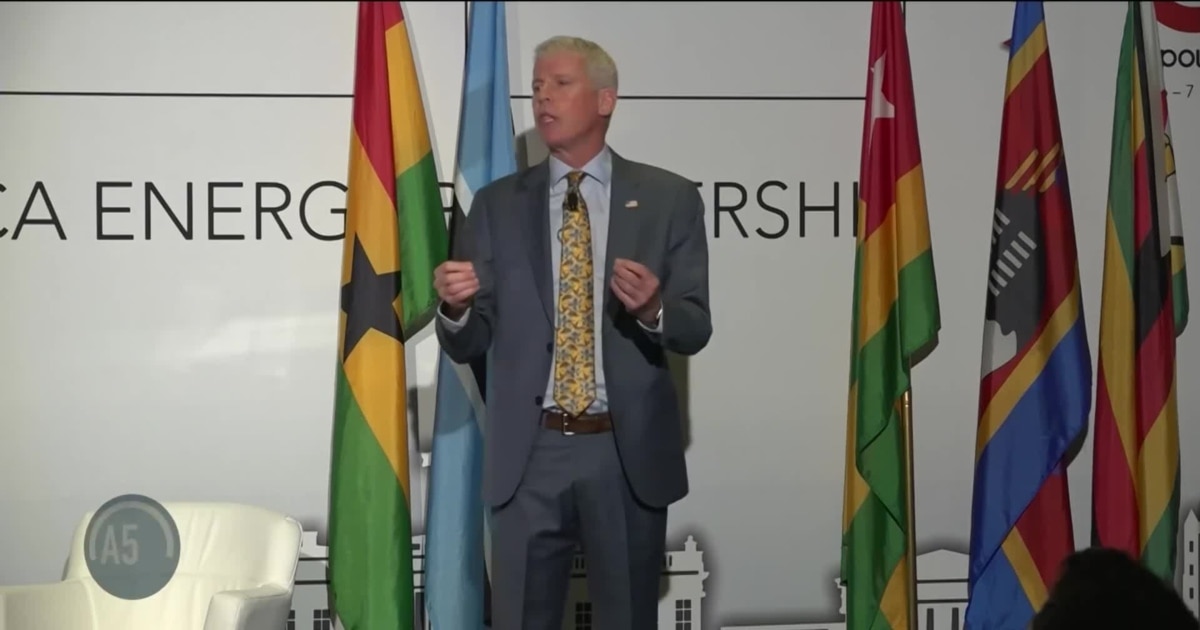
Le sommet africain de l'énergie s'est imposé comme un rendez-vous incontournable dans la marche du continent vers l'indépendance énergétique, le développement durable et une croissance inclusive. Organisé à Washington D.C. dans le cadre de la 10e édition de la Powering Africa Initiative, le rassemblement de cette année a réuni plus de 1 200 dirigeants, investisseurs et innovateurs des 54 nations africaines, avec pour objectif d'accélérer la transition vers une énergie fiable, propre et abordable.
Le sommet africain de l'énergie n'est plus seulement un forum de politique publique — c'est désormais un tremplin pour la transformation. Des investissements majeurs dans le solaire et l'éolien aux interconnexions régionales de réseaux électriques, en passant par l'innovation portée par les jeunes, le sommet a mis en lumière un continent prêt à assurer sa propre production d'énergie.
Pour des reportages approfondis sur la transformation énergétique de l'Afrique et l'évolution des politiques publiques, rendez-vous sur VOA Africa – Energy, Innovation & Development Across the Continent.
La Powering Africa Initiative : dix ans de progrès
De la vision aux résultats concrets
Le sommet africain de l'énergie marque le 10e anniversaire de la Powering Africa Initiative, lancée en 2014 pour répondre au déficit énergétique du continent. À l'époque, plus de 600 millions d'Africains n'avaient pas accès à l'électricité. Aujourd'hui, ce chiffre est tombé à environ 550 millions — une évolution notable, rendue possible grâce aux partenariats public-privé, à l'innovation technologique et aux réformes des politiques publiques.
Selon un rapport 2025 de l'Agence internationale de l'énergie (*source ici*), l'Afrique subsaharienne a ajouté plus de 25 gigawatts de nouvelle capacité de production électrique entre 2015 et 2024, les énergies renouvelables représentant 60 % des nouvelles installations.
Sur notre espace Énergies renouvelables en Afrique, nous revenons sur la façon dont les pays développent l'énergie propre pour répondre à une demande croissante et atteindre leurs objectifs climatiques.
Coopération énergétique entre les États-Unis et l'Afrique en 2025
Le sommet africain de l'énergie a réaffirmé l'engagement américain en matière de coopération énergétique, avec de nouvelles promesses de 2,3 milliards de dollars en financements et en soutien technique. Ces fonds couvrent la modernisation des réseaux électriques, les systèmes solaires hors réseau et des programmes de formation professionnelle.
« Nous ne construisons pas seulement des lignes électriques — nous bâtissons des partenariats », a déclaré un responsable du Département d'État américain. « L'accès à l'énergie est le socle de la croissance économique, de la santé et de l'éducation. »
Le sommet a également mis en avant le rôle grandissant des solutions portées par les Africains eux-mêmes, les agences américaines passant progressivement du statut de donateur à celui de collaborateur dans la planification et la mise en œuvre des projets énergétiques.
5 grandes décisions qui façonnent le continent
Décision n°1 : l'essor des mini-réseaux et du solaire hors réseau
L'un des développements les plus marquants du sommet africain de l'énergie a été l'expansion des mini-réseaux et des solutions solaires hors réseau. Dans des villages isolés du Nigeria, du Kenya et d'Éthiopie, des micro-réseaux solaires alimentent désormais des foyers, des dispensaires et des écoles.
Des entreprises comme M-KOPA, d.light et Zola Electric sont en première ligne, en proposant des systèmes solaires avec paiement à l'utilisation à plus de 20 millions de ménages. « Nous sommes passés de la pauvreté énergétique à la dignité énergétique », a affirmé un directeur général présent au sommet.
La Banque africaine de développement s'est engagée à débloquer 1 milliard de dollars pour développer les mini-réseaux dans 20 pays d'ici 2030, avec l'objectif de connecter 25 millions de personnes.
Décision n°2 : l'hydrogène vert et la nouvelle économie de l'énergie
Le sommet africain de l'énergie a mis l'hydrogène vert sous les feux des projecteurs, le présentant comme un véritable tournant. La Namibie, l'Afrique du Sud et la Mauritanie investissent des milliards dans des projets d'hydrogène vert, en utilisant l'énergie solaire et éolienne pour produire un carburant propre destiné à l'exportation et à la consommation locale.
Le projet namibien Hyphen, soutenu par 10 milliards de dollars d'investissements, sera l'une des plus grandes usines d'hydrogène vert au monde à son achèvement en 2028. « L'Afrique n'est plus seulement un fournisseur de matières premières — nous devenons un exportateur d'énergie propre », a déclaré un ministre namibien.
Les experts prévoient que l'hydrogène vert pourrait générer 100 milliards de dollars de revenus pour l'Afrique d'ici 2040.
Décision n°3 : l'interconnexion des réseaux régionaux et les pools énergétiques
Le sommet africain de l'énergie a insisté sur l'importance de la coopération régionale. L'objectif de l'Union africaine de créer un marché énergétique continental unique avance grâce aux pools d'énergie régionaux comme le SAPP (Afrique australe), le WAPP (Afrique de l'Ouest) et l'EAPP (Afrique de l'Est).
En 2025, le West African Power Pool a connecté cinq nouvelles lignes de transmission transfrontalières, permettant au Ghana d'exporter son surplus d'énergie solaire vers le Burkina Faso et le Togo.
« L'énergie ne s'arrête pas aux frontières », a dit un responsable de la CEDEAO chargé de l'énergie. « Quand un pays brille, nous en profitons tous. »
Décision n°4 : la place des femmes dans le secteur de l'énergie
L'inclusion des femmes a été l'un des grands axes du sommet africain de l'énergie. Elles ne représentent que 22 % de la main-d'œuvre du secteur énergétique africain, mais des initiatives comme l'African Women in Energy Development (AWED) sont en train de changer la donne.
Le sommet a lancé un fonds de 50 millions de dollars pour soutenir les startups énergétiques dirigées par des femmes et les programmes de formation. « Quand les femmes prennent les rênes dans l'énergie, les communautés s'épanouissent », a déclaré une intervenante.
Des entrepreneures solaires au Rwanda aux ingénieures en Égypte, les femmes sont moteur de l'innovation et de l'accès à l'énergie.
Décision n°5 : l'innovation jeunesse et la transition énergétique numérique
Le sommet africain de l'énergie a accueilli un Youth Innovation Pavilion, qui a mis en valeur des startups utilisant l'IA, la blockchain et l'IoT pour améliorer l'efficacité et l'accès à l'énergie.
Parmi les lauréats du Powering Africa Youth Challenge, une équipe nigériane a développé un compteur intelligent alimenté par l'énergie cinétique, et une application kényane permet de suivre en temps réel les performances des panneaux solaires.
« L'avenir de l'énergie est numérique — et c'est la jeunesse africaine qui le construit », a affirmé un représentant de l'USAID.
Les défis et la voie à suivre
Manque de financement et obstacles à l'investissement
Malgré les progrès accomplis, le sommet africain de l'énergie a reconnu que le financement reste un défi majeur. Le continent a besoin de 70 milliards de dollars par an pour atteindre ses objectifs énergétiques — mais il n'en attire actuellement que moins de 30 milliards.
La perception élevée du risque, la volatilité des monnaies et la complexité des cadres réglementaires freinent les investisseurs privés. Le sommet a plaidé pour des modèles de financement mixte et des garanties de crédit plus solides afin de débloquer les capitaux.
« Nous avons besoin de plus que de l'aide — nous avons besoin d'investissements », a lancé un ministre nigérian des Finances.
Changement climatique et résilience énergétique
Le sommet africain de l'énergie s'est aussi penché sur la menace croissante que le changement climatique fait peser sur les infrastructures énergétiques. La hausse des températures, les sécheresses et les inondations perturbent les centrales hydroélectriques et thermiques.
Les experts ont exhorté les gouvernements à construire des réseaux résilients face au climat et à diversifier les sources d'énergie pour garantir la stabilité.
« La sécurité énergétique passe par la résilience climatique », a averti un climatologue. « Nous devons nous adapter, sinon nous risquons des coupures de courant. »
L'avenir énergétique de l'Afrique
Un continent en plein essor
Le sommet africain de l'énergie s'est conclu avec un message sans équivoque : l'Afrique n'attend plus qu'on lui fournisse de l'électricité — elle en produit elle-même. Porté par des politiques ambitieuses, des technologies innovantes et des partenariats solides, le continent est sur la bonne voie pour atteindre un accès universel à l'électricité d'ici 2050.
« Il ne s'agit pas seulement de lumière — il s'agit de vie », a déclaré l'Envoyé spécial de l'ONU pour l'énergie. « Chaque connexion change un avenir. »
Le sommet s'est terminé sur l'engagement d'ajouter 300 millions de nouvelles connexions électriques d'ici 2030.
Un modèle mondial pour le développement durable
Le sommet africain de l'énergie dépasse le cadre régional — il offre un modèle mondial pour le développement durable. À l'heure où la planète entière cherche des solutions énergétiques propres, l'approche africaine, décentralisée et axée sur les renouvelables, constitue un exemple puissant.
Des villages solaires aux pôles d'hydrogène vert, le continent démontre qu'une transition énergétique juste n'est pas seulement possible — elle est déjà en marche.
L'avenir sera alimenté par l'Afrique.
Source de l'article : https://www.voaafrica.com