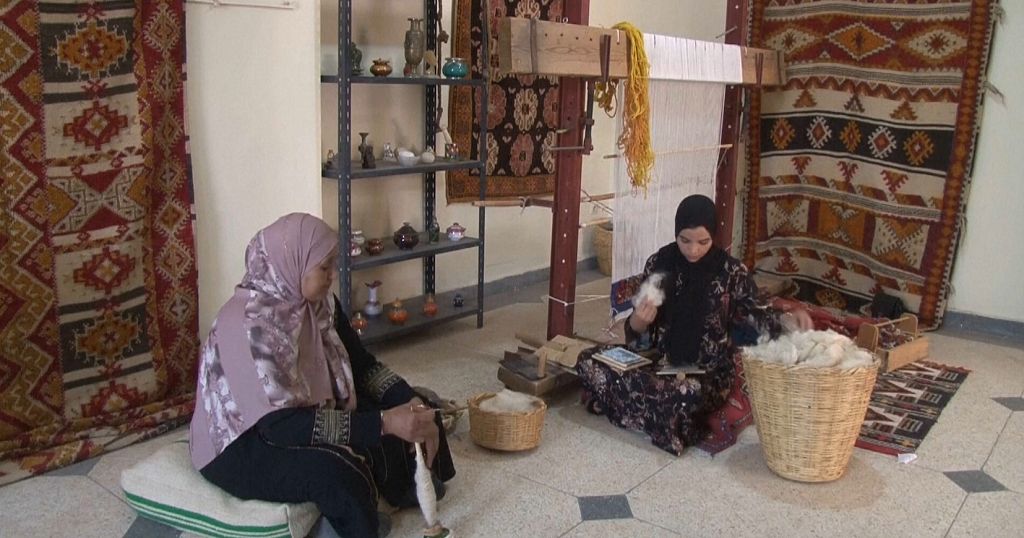
L'art du tissage de tapis marocain se transmet de génération en génération chez les femmes berbères des montagnes de l'Atlas et des villages ruraux du Maroc. Bien plus qu'un simple artisanat, c'est un langage vivant fait de symboles, de récits et d'identité. Ces dernières années, cette tradition ancestrale a gagné une reconnaissance mondiale, non seulement pour sa beauté, mais aussi pour la résilience et la créativité des femmes qui la font vivre.
Ces traditions de tissage de tapis marocain vont bien au-delà du décoratif — elles sont une forme de résistance culturelle, d'autonomisation économique et de mémoire ancestrale. Chaque nœud raconte une histoire de fertilité, de protection ou de croyance spirituelle, tissée en silence dans la laine par des mains qui n'ont jamais connu autre chose.
Pour en savoir plus sur la culture et le patrimoine africains, visitez Africanews – Culture, Tradition & Innovation en Afrique.
L'héritage du tissage de tapis marocain
Un art ancestral, une pertinence moderne
La tradition du tissage de tapis marocain remonte à plus de 2 000 ans, avec des racines dans les civilisations amazighes (berbères) d'Afrique du Nord. Ces tapis étaient à l'origine fabriqués pour des usages pratiques — isolation contre les nuits froides en montagne, revêtements de sol pour les tentes, et cadeaux cérémoniels lors des mariages et des naissances.
Selon un rapport UNESCO de 2025 sur le patrimoine culturel immatériel (*source ici*), le tissage de tapis marocain est l'une des dernières traditions textiles entièrement faites à la main dans le monde, sans motifs standardisés — chaque pièce est unique à sa créatrice.
Sur notre espace dédié à l'artisanat marocain, nous revenons sur la façon dont les savoir-faire traditionnels sont préservés et adaptés pour de nouveaux marchés.
Les femmes, gardiennes de la culture
Cette pratique est menée presque exclusivement par des femmes, souvent dès l'âge de 12 ans. Dans beaucoup de communautés amazighes, le premier tapis d'une fille est tissé comme un rite de passage, symbolisant son entrée dans l'âge adulte.
Ces femmes ne sont pas de simples artisanes — ce sont des historiennes, des artistes et des éducatrices. Les symboles qu'elles tissent — des losanges pour la fertilité, des zigzags pour l'eau, des croix pour la protection — forment un langage visuel transmis oralement de mère en fille.
« Quand je tisse, je parle sans mots », a dit Fatima Zahra, une tisseuse de 68 ans du village de Taznakht. « Mes tapis portent les rêves de mes ancêtres. »
Les 5 secrets puissants des artisanes berbères
Secret n°1 : Un symbolisme qui parle fort
L'un des aspects les plus puissants du tissage de tapis marocain est son langage symbolique. Contrairement aux tapis produits en série, chaque tapis berbère porte des motifs intentionnels qui racontent des histoires personnelles et collectives.
Par exemple :
- La croix amazighe : représente les quatre éléments (terre, air, feu, eau).
- Les motifs en losange : symbolisent la fertilité et le corps féminin.
- Les lignes en zigzag : représentent l'eau ou les serpents, tous deux protecteurs contre le mal.
- Les empreintes de mains : tissées pour éloigner le mauvais œil.
Ces symboles ne sont jamais écrits — ils vivent dans la mémoire et l'intuition. « Je ne planifie pas le dessin », a dit Aicha, une tisseuse du Haut Atlas. « C'est le tapis qui me dit ce qu'il veut devenir. »
Secret n°2 : Des teintures naturelles et des pratiques durables
Le processus de tissage de tapis marocain repose sur des matériaux 100 % naturels. La laine provient des moutons locaux, elle est nettoyée, filée à la main, puis teinte avec des plantes, des racines et des minéraux de la région.
Les teintures couramment utilisées comprennent :
- Le henné → Brun/Rouge
- L'indigo → Bleu profond
- Le safran → Jaune doré
- Les coques de noix → Noir/Brun
Cette approche écologique a attiré l'attention mondiale, avec des designers à Paris et à New York qui recherchent des pièces authentiques et durables.
Secret n°3 : Le tissage comme thérapie émotionnelle et spirituelle
Pour beaucoup de femmes berbères, le tissage de tapis marocain est une forme de libération émotionnelle. Dans des communautés où les femmes ont un accès limité à l'éducation ou à la parole publique, le métier à tisser devient un espace d'expression.
Certains tapis sont tissés dans les moments de deuil, d'autres dans la joie. Une veuve peut tisser un motif sombre et complexe pour pleurer son mari ; une jeune mère peut créer une pièce lumineuse et joyeuse pour son enfant.
« Le tapis, c'est mon journal intime », a dit Lalla Mina de Toubkal. « Je pleure dans la laine, et quand j'ai fini, je me sens libre. »
Secret n°4 : Autonomisation économique et coopératives
L'industrie du tissage de tapis marocain est devenue une source de revenus vitale pour des milliers de femmes rurales. Autrefois, des intermédiaires achetaient les tapis pour une fraction de leur valeur. Aujourd'hui, les coopératives dirigées par des femmes changent la donne.
Il existe désormais plus de 600 coopératives de tissage au Maroc, soutenues par des ONG et des programmes gouvernementaux. Ces groupes permettent aux femmes de fixer des prix équitables, d'accéder aux marchés internationaux et de conserver leurs bénéfices.
« Avant, je gagnais 50 dirhams par tapis », a dit Khadija de Midelt. « Maintenant, avec la coopérative, j'en gagne 1 500 — et je garde chaque centime. »
Secret n°5 : Un art vivant qui évolue
Profondément ancré dans la tradition, le tissage de tapis marocain n'est pas figé dans le temps pour autant. Beaucoup de jeunes tisseuses mêlent les techniques ancestrales à une esthétique moderne, créant des pièces pour des intérieurs contemporains et des collaborations dans le monde de la mode.
Certaines ont noué des partenariats avec des marques mondiales comme IKEA et Anthropologie, tandis que d'autres vendent directement via des plateformes en ligne comme Etsy et Instagram.
« Nous ne sommes pas des pièces de musée », a dit Leila, une tisseuse de 29 ans. « Nous sommes des artistes. Notre tradition vit parce qu'on lui laisse de l'espace. »
Les menaces qui pèsent sur la tradition
La production de masse et les imitations
La popularité mondiale du tissage de tapis marocain a entraîné une prolifération d'imitations fabriquées à la machine. Vendus en ligne comme des tapis « de style marocain », ces produits sont souvent fabriqués dans des usines en Chine ou en Inde, au détriment des artisanes authentiques.
Cela nuit non seulement à l'économie des femmes rurales, mais dilue aussi le sens culturel de cet artisanat.
« Ils copient nos motifs, mais pas notre âme », a dit une responsable de coopérative. « Un vrai tapis berbère se fait avec des prières — pas avec des machines. »
L'urbanisation et l'exode des jeunes
Les jeunes générations migrent de plus en plus vers les villes pour les études et le travail, laissant moins de femmes pour perpétuer la tradition du tissage de tapis marocain.
Si certaines numérisent le savoir-faire, d'autres craignent un vide culturel. « Ma fille veut être médecin », a dit Fatima. « Je suis fière — mais qui tissera quand je ne serai plus là ? »
Des ONG et des organisations culturelles lancent désormais des programmes d'apprentissage pour enseigner cet art aux jeunes femmes, afin d'en assurer la survie au XXIe siècle.
L'impact mondial du tissage de tapis marocain
Mode, design et diplomatie culturelle
L'esthétique du tissage de tapis marocain a influencé la mode et le design d'intérieur à l'échelle mondiale. Des défilés de Milan aux maisons minimalistes de Californie, les motifs berbères sont célébrés pour leur géométrie audacieuse et leurs tons terreux.
Le Maroc a même utilisé son patrimoine textile comme outil de soft power, en offrant des tapis tissés à la main à des dignitaires étrangers et en les présentant dans des expositions culturelles à travers le monde.
« C'est notre drapeau », a dit un attaché culturel. « Pas fait de tissu — mais de laine, de mémoire et de fierté. »
Le tourisme et les initiatives de tourisme culturel
Beaucoup de touristes visitent désormais le Maroc non seulement pour ses villes, mais pour découvrir le tissage de tapis marocain de première main. Ateliers, visites de villages et démonstrations de tissage sont devenus des attractions prisées dans des régions comme Ouarzazate et les montagnes de l'Atlas.
Ces expériences permettent non seulement de sensibiliser les visiteurs, mais aussi d'apporter un revenu direct aux artisanes.
« Quand un touriste touche le tapis que j'ai fait, je me sens vue », a dit Amina de Tazenakht. « Et le monde voit le Maroc — pas comme une carte postale, mais comme une culture vivante. »
Source de l'article : https://www.africanews.com