 khaledadmin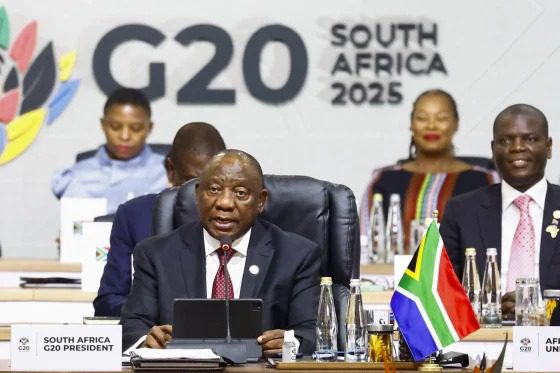
G20 Diplomacy has come under renewed scrutiny after Germany’s ambassador urged the United States to engage more actively with African nations, following South Africa’s warning that the continent risks marginalisation at upcoming global summits. The call highlights growing concerns that Africa’s perspectives may be underrepresented in critical international decision-making forums.
Diplomats say the issue raises fundamental questions about inclusivity, legitimacy, and balance within global governance structures.
What Prompted the G20 Diplomacy Debate?
Concerns around G20 Diplomacy intensified after reports suggested that African participation in future G20-linked meetings could be limited. South Africa, the only African country with permanent G20 membership, has voiced fears that Africa’s collective interests may not receive sufficient attention.
Germany responded by stressing that open dialogue and cooperation are essential to prevent exclusion and maintain trust in international institutions.
Germany’s Position on Inclusive Engagement
Germany’s ambassador emphasized that the effectiveness of global forums depends on broad participation.
“Global challenges cannot be addressed without Africa at the table,” the ambassador said, underlining the importance of sustained engagement between the US, Europe, and African partners.
Germany has consistently supported inclusive G20 Diplomacy, arguing that representation strengthens the credibility and outcomes of international summits.
South Africa’s Role Within the G20
South Africa plays a strategic role as Africa’s principal representative within the G20 framework. Officials argue that exclusion from major discussions would weaken Africa’s influence on decisions related to:
- Global economic recovery
- Climate finance and adaptation
- Development funding
- Trade and debt relief
South African leaders warn that undermining G20 Diplomacy risks sidelining the needs of developing economies
Why G20 Diplomacy Matters for Africa
Africa’s growing importance to the global economy makes inclusive G20 Diplomacy increasingly critical.
Key factors include:
- Africa’s rapidly expanding population and markets
- Its role in global supply chains and critical minerals
- Its vulnerability to climate change impacts
Analysts say decisions taken without African input may fail to address these realities, weakening global policy effectiveness.
United States Engagement Under the Spotlight
Germany’s appeal has drawn attention to Washington’s role in shaping G20 Diplomacy. Experts note that US engagement is vital for:
- Maintaining balance in global leadership
- Supporting multilateral cooperation
- Preventing geopolitical fragmentation
Reduced involvement, they warn, could create diplomatic gaps and diminish Africa’s trust in global institutions.
International and Policy Community Reactions
The issue has sparked debate across diplomatic and policy circles.
- Supporters of inclusive diplomacy argue Africa’s participation enhances legitimacy
- Critics caution that exclusion could fuel global inequality
- Policy experts suggest reforming representation models within the G20
The discussion reflects a broader reassessment of how G20 Diplomacy should evolve in a changing global landscape.
Public and Academic Discourse
Although largely diplomatic, the debate has resonated beyond government circles.
Public commentary highlights:
- Calls for fairness in global governance
- Support for South Africa’s stance
- Growing awareness of Africa’s global economic role
Academics argue that inclusive G20 Diplomacy improves policy outcomes and strengthens international cooperation.
Expert Analysis on Global Governance
International relations experts emphasize that effective global governance depends on representation.
Key insights include:
- Africa’s perspectives improve decision-making quality
- Exclusion risks one-sided policy approaches
- Institutional reform is increasingly necessary
Experts say the future of G20 Diplomacy will depend on whether major powers are willing to share influence more equitably.
What Happens Next?
Diplomatic observers expect continued engagement in the lead-up to upcoming summits, including:
- Further dialogue between African leaders and G20 partners
- Efforts to ensure Africa’s voice is reflected in summit outcomes
- Renewed calls for reforming global institutions
South Africa is expected to continue advocating strongly for inclusive G20 Diplomacy, emphasizing Africa’s rising strategic importance.
Conclusion
The renewed focus on G20 Diplomacy underscores growing concerns about Africa’s role in global decision-making. Germany’s call for stronger US engagement reflects broader efforts to ensure the continent remains an active participant in shaping global economic and political agendas.
As global challenges become more interconnected, inclusive diplomacy may determine whether international institutions remain relevant, credible, and effective in addressing the needs of all regions.